

Deal Alert 
SCD Advisory acted as exclusive sell side advisor to Advancy Australia on its sale to PwC Australia
02nd October 2026 4 min. read

 Our Focus image"/>

Artificial intelligence (AI) has entered B2B services delivery at speed. Across consulting, IT services, and engineering, it is being used to draft deliverables, analyse client data, automate workflows, and accelerate almost every part of how firms operate. That productivity gain is real, but so is the risk it has introduced.
Australia is already one of the most heavily targeted countries for cyberattacks. Businesses faced an incident every six minutes in 2024-25, and the average cost per incident for a small business reached $56,600 – up 14% in a single year (Tech Guide Australia, 2026). What has changed is not just the volume of attacks but their nature: AI is giving adversaries capabilities that were previously the preserve of nation-state actors, while simultaneously creating new classes of vulnerability inside the organisations being targeted.
The profile of who is being targeted has shifted. Attacks are no longer aimed primarily at financial infrastructure or consumer platforms. They increasingly target the access, credentials, and client data held by professional services firms – the strategy documents held by a consulting practice, the system credentials managed by an IT services provider, the infrastructure designs produced by an engineering consultancy.
Hyper-personalised phishing is now the leading concern among security professionals globally, cited by 50% of respondents in the State of AI Cybersecurity 2026 report, followed by automated vulnerability scanning and exploit chaining (45%) and adaptive malware (40%) (Kiteworks, 2026). Attackers are using AI to orchestrate full attack chains, from initial reconnaissance through to data exfiltration, with minimal human involvement.
Ransomware has also evolved. Trend Micro’s 2026 security predictions describe it as shifting from a disruptive event into a systemic issue that exploits every enterprise dependency, from AI models and supply chains to APIs and business relationships (Trend Micro, 2026). Agentic AI is now being used to handle portions of the ransomware attack chain, including reconnaissance, vulnerability scanning, and ransom negotiations, without human oversight.
The more significant development for services firms may not be the external threat but the vulnerabilities being introduced internally, through the AI tools their own teams are using.
AI adoption across professional services has largely been practitioner led, driven by individuals who found tools that made them more productive, often before governance frameworks were in place. These tools process client data, access internal knowledge bases, and interact with external platforms. In many firms, this has happened without a clear picture of what data is being accessed, stored, or transmitted.
The 2026 Thales Data Threat Report found that only 34% of organisations know where all their data resides and just 39% can fully classify it, with nearly half of sensitive cloud data remaining unencrypted. IBM research has identified that 20% of breaches now involve “shadow AI” (tools adopted informally without organisational oversight) and that these incidents carry an average breach cost of $5.01 million, compared to $4.44 million for standard breaches.
The specific vulnerabilities AI deployment is introducing into service delivery include prompt injection attacks, in which malicious instructions embedded in external content manipulate AI agents into revealing confidential data; data poisoning, in which AI inputs are deliberately corrupted to produce false or harmful outputs; and supply chain compromise through AI vendors, in which a vulnerability in a third party tool becomes an entry point into client systems. Verizon’s 2025 Data Breach Investigations Report found third party involvement in breaches doubled from 15% to 30% in a single year.
Gartner forecasts that 40% of enterprise applications will feature task-specific AI agents by 2026, yet only 6% of organisations have an advanced AI security strategy in place.
A global study of 3,700 business and IT decision makers found that 67% have felt pressured to approve AI deployment despite known security concerns. Almost one in five Australian respondents described those concerns as “extreme” but said they were overridden by competitive and internal pressure. The result: 68% of Australian organisations report that AI is advancing more quickly than they can secure it (TrendAI, 2026).
In professional services firms, this gap is particularly pronounced. Most consulting, IT, and engineering businesses operate without dedicated security functions. AI adoption has moved from the bottom up, creating a fragmented picture of what tools are in use and what data they can access. The 2026 ISACA, Accenture, and World Economic Forum reports converge on the same finding: governance maturity, not budget, is the primary.
The consequences are not only operational. For firms delivering regulated advice, technical specifications, or sensitive client counsel, inconsistent or manipulated AI outputs carry direct professional liability. Cybersecurity incidents affecting client data trigger contractual, reputational, and legal exposure that extends well beyond the immediate cost of the incident.
In May 2026, ASIC issued an open letter to all licensees calling for urgent action on cyber resilience, warning that frontier AI could expose vulnerabilities “at unprecedented speed, scale, and sophistication.” The letter was directed to be tabled at board level and reinforced that cyber resilience is a core licensing obligation (ASIC, May 2026). ASIC penalties for compliance failures have reached AUD $66,000 (Tech Guide Australia, 2026).
Several overlapping obligations are now in force or imminent. Mandatory smart-device security standards took effect in March 2026. Privacy Act amendments covering automated decision making take effect in December 2026. The Notifiable Data Breaches scheme, which applies to organisations with annual turnover above $3 million, is being triggered more frequently as AI-powered attacks scale both frequency and impact.
For IT services and consulting firms serving regulated sectors – financial services, health, infrastructure, and government – the obligations extend further. Clients in these sectors are themselves subject to APRA CPS 234 and the Security of Critical Infrastructure Act. The firms advising and supporting them are increasingly expected to demonstrate equivalent security maturity, with contractual obligations in some cases being rewritten to require it.
Australia faces a shortage of more than 30,000 cybersecurity professionals in 2026, with 54% of local security teams understaffed and 58% reporting unfilled positions (Tech Guide Australia, 2026). That gap is driving a sustained wave of demand for external cybersecurity consulting and managed security services across the B2B sector, and contributing to the consolidation activity that is reshaping those markets.
SCD Advisory has recently published its Cybersecurity Sector Report, providing an overview of the Australian cybersecurity landscape, recent M&A activity, key transactions and valuation trends across the sector. Contact us to receive a copy.
At SCD Advisory, we offer a range of services from deal preparation to transaction execution. Contact us at info@scdadvisory.com to find out more.
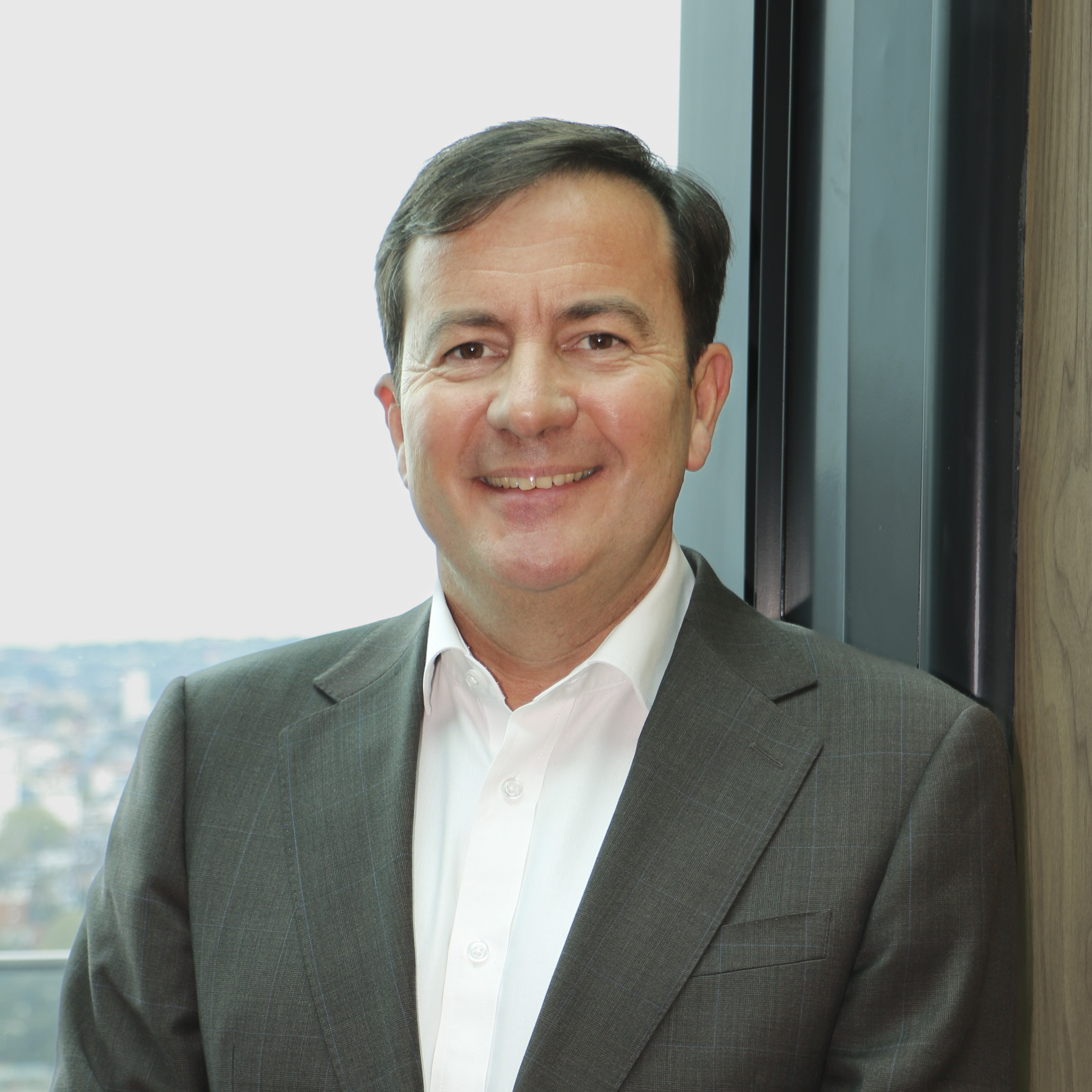
Pierre brings 25 years of expertise in advising entrepreneurs, with a deep background in management and financial advisory across corporate finance, private banking, and wealth management. His extensive experience includes numerous sell-side and buy-side deals, IPOs, mergers, integrations, and consulting projects for both small businesses and large global corporations. As an established and highly regarded advisor, Pierre is known for his savvy, trusted guidance.
Pierre’s career began in Australia before he moved to France, where he worked with prominent business figures like billionaire François Pinault on M&A deals within the Artemis group. He then founded BC&D, an M&A small-cap firm in Paris, where he managed corporate advisory services across Europe, covering both origination and execution. His work extended beyond transactions, advising entrepreneurs on wealth management strategies to optimise the transition from business ownership.
In Paris, he held advisory roles at the Belgium Family Office (DeGroof) and as a senior private banker and head of the HNW segment for France at JP Morgan. Returning to Australia in 2015, Pierre established the ANZ subsidiary of a UK-headquartered M&A firm, executing 9 M&A transactions across Australia. In 2019, he launched SCD Advisory, where he has since completed 35+ transactions, earning multiple global awards in M&A advisory from 2021 to 2024. Notably, he was named ‘Deal Maker of the Year’ by Finance Monthly in 2022 for his sale of Hypothesis to McKinsey & Co.
Pierre graduated from the Business of Troyes in France and has a postgraduate in Corporate Finance from the University of Caen. He is also a certified Financial Analyst and a Graduate of the Australian Institute of Company Directors (GAICD). Pierre further enhanced his credentials by completing the “Leading Professional Services Firms” program at Harvard Business School. His track record and accolades highlight his dedication to excellence and his exceptional skill in delivering successful outcomes for his clients.
Pierre is French, Australian citizen, Overseas Citizen of India. He is married and has two children. He is passionate about international travel, gastronomy, sailing and golf. As an experienced sailor, his motto in business and life in general is: “We cannot direct the wind, but we can trim the sails”



Give us a call on +61 434 730 099. Or, email us at info@scdadvisory.com
or fill in our contact form and we will give you a call.