

Deal Alert 
SCD Advisory acts as exclusive financial advisor to Information Quality on its sale to SGS SA
24th November 2025 4 min. read

 Our Focus image"/>

The conversation around AI and professional services has become increasingly dramatic. Headlines regularly ask whether generative AI will replace consultants, analysts and advisory firms.
But that framing misses the real story.
A great article by James O’Dowd: “AI Isn’t Killing Consulting, It’s Exposing What Was Already Broken” offers a far more nuanced view of what is actually happening inside consulting firms today. Drawing on a discussion with Peter Fuller (former McKinsey leader and CEO of Tracelight), the article argues that AI is not destroying the consulting industry. Instead, it is acting as a stress test, exposing structural weaknesses that already existed in many firms’ operating models.
The implications go well beyond consulting. They apply to advisory, professional services, and knowledge industries more broadly.
The Real Issue: Misaligned Business Models
For years, large consulting firms built their economics around a familiar model: a pyramid of junior analysts performing research, analysis and documentation, supported by mid-level managers and senior partners.
Much of that work (research synthesis, benchmarking, slide creation, process mapping) is exactly the type of structured knowledge work that modern AI tools can now perform rapidly and cheaply.
This is where the tension emerges.
As O’Dowd notes, many firms expanded aggressively during the post-pandemic boom and built cost structures around labour-intensive delivery models. When demand normalized, AI became a convenient explanation for margin pressure. But in reality, AI simply repriced activities that were already vulnerable to automation.
The underlying issue was not AI itself, it was the misalignment between firms’ talent models and the type of work clients now value.
Consulting Isn’t Shrinking, It’s Evolving
Interestingly, the consulting industry is not actually contracting.
In fact, forecasts suggest the market may grow around 7% this year, driven largely by AI implementation, infrastructure, and operating model redesign.
This highlights an important paradox:
AI is compressing some traditional consulting activities, yet simultaneously creating new advisory demand.
Organizations need help with:
Historically, every major technological shift, from ERP systems to cloud computing, has been a boom period for advisory firms. AI appears to be following the same pattern.
The Real Differentiator Isn’t AI Access
Another key insight from the discussion is that AI itself will not be the differentiator between consulting firms.
Access to models and tools is becoming increasingly commoditized.
Instead, competitive advantage will come from:
In other words, the value shifts from producing analysis to enabling decisions.
The Changing Shape of Consulting Teams
AI is also reshaping how consulting teams operate.
Traditional pyramids are likely to evolve into leaner delivery models, where smaller teams combine senior expertise with AI-driven analytical capability.
Rather than large teams producing slide decks, consulting may increasingly revolve around:
In many ways, this could favour specialist boutiques and advisory firms that already operate with leaner structures and domain expertise.
A Shift From “Advice” to “Impact”
The deeper shift may be philosophical rather than technological.
Clients are becoming less interested in:
Instead, they are increasingly seeking partners who can:
AI may automate information, but it cannot replace context, judgment and trust – the core ingredients of effective advisory work.
The Bottom Line
As James O’Dowd concludes in his article, AI is not eliminating consulting. Rather, it is highlighting structural weaknesses that already existed within parts of the industry, particularly delivery models heavily reliant on large teams performing repeatable analytical work.
In that sense, AI is less a disruptor and more a diagnostic tool, exposing where traditional consulting models have struggled to adapt to changing client expectations and advances in technology.
The article suggests that firms able to evolve their operating models, moving beyond labour-intensive delivery toward deeper expertise, smarter workflows and more decision-oriented advisory, are likely to remain highly relevant. Meanwhile, those that rely primarily on scale and traditional pyramid structures may find the transition more challenging.
Ultimately, the conclusion is not that consulting is disappearing, but that the industry is entering a period of structural recalibration as AI reshapes how knowledge work is delivered and valued.
SCD Advisory is an independent Australian corporate advisory boutique, dedicated to the B2B Services sectors – from IT and digital engineering to marketing and consulting – to help sharpen the growth narrative, present the right metrics, and position for successful M&A outcomes.
If you’re starting to think about a transaction, it’s never too early to start shaping the story. We offer a range of services from deal preparation to transaction execution. Contact us at info@scdadvisory.com to find out more.
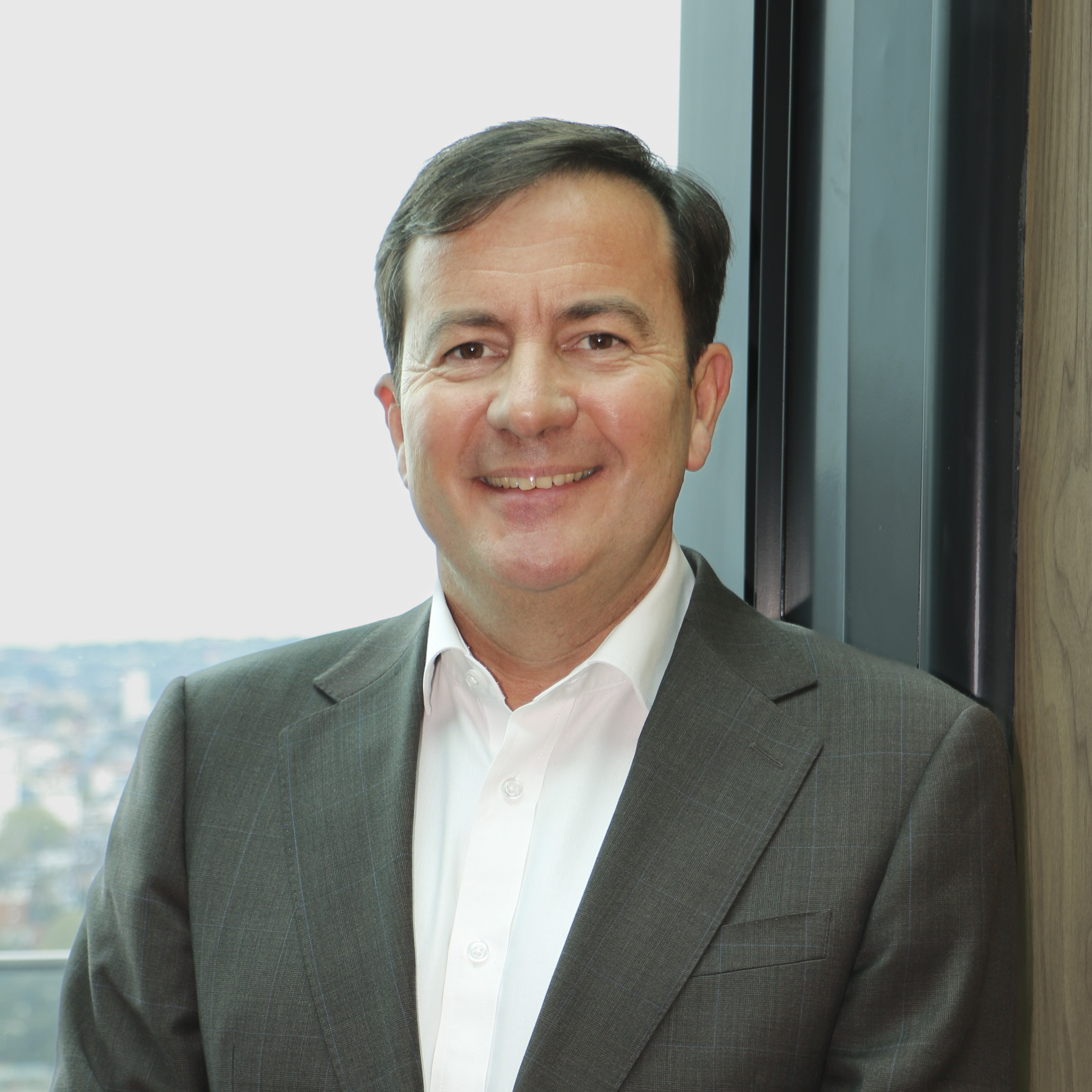
Pierre brings 25 years of expertise in advising entrepreneurs, with a deep background in management and financial advisory across corporate finance, private banking, and wealth management. His extensive experience includes numerous sell-side and buy-side deals, IPOs, mergers, integrations, and consulting projects for both small businesses and large global corporations. As an established and highly regarded advisor, Pierre is known for his savvy, trusted guidance.
Pierre’s career began in Australia before he moved to France, where he worked with prominent business figures like billionaire François Pinault on M&A deals within the Artemis group. He then founded BC&D, an M&A small-cap firm in Paris, where he managed corporate advisory services across Europe, covering both origination and execution. His work extended beyond transactions, advising entrepreneurs on wealth management strategies to optimise the transition from business ownership.
In Paris, he held advisory roles at the Belgium Family Office (DeGroof) and as a senior private banker and head of the HNW segment for France at JP Morgan. Returning to Australia in 2015, Pierre established the ANZ subsidiary of a UK-headquartered M&A firm, executing 9 M&A transactions across Australia. In 2019, he launched SCD Advisory, where he has since completed 35+ transactions, earning multiple global awards in M&A advisory from 2021 to 2024. Notably, he was named ‘Deal Maker of the Year’ by Finance Monthly in 2022 for his sale of Hypothesis to McKinsey & Co.
Pierre graduated from the Business of Troyes in France and has a postgraduate in Corporate Finance from the University of Caen. He is also a certified Financial Analyst and a Graduate of the Australian Institute of Company Directors (GAICD). Pierre further enhanced his credentials by completing the “Leading Professional Services Firms” program at Harvard Business School. His track record and accolades highlight his dedication to excellence and his exceptional skill in delivering successful outcomes for his clients.
Pierre is French, Australian citizen, Overseas Citizen of India. He is married and has two children. He is passionate about international travel, gastronomy, sailing and golf. As an experienced sailor, his motto in business and life in general is: “We cannot direct the wind, but we can trim the sails”




Give us a call on +61 434 730 099. Or, email us at info@scdadvisory.com
or fill in our contact form and we will give you a call.