

Deal Alert 
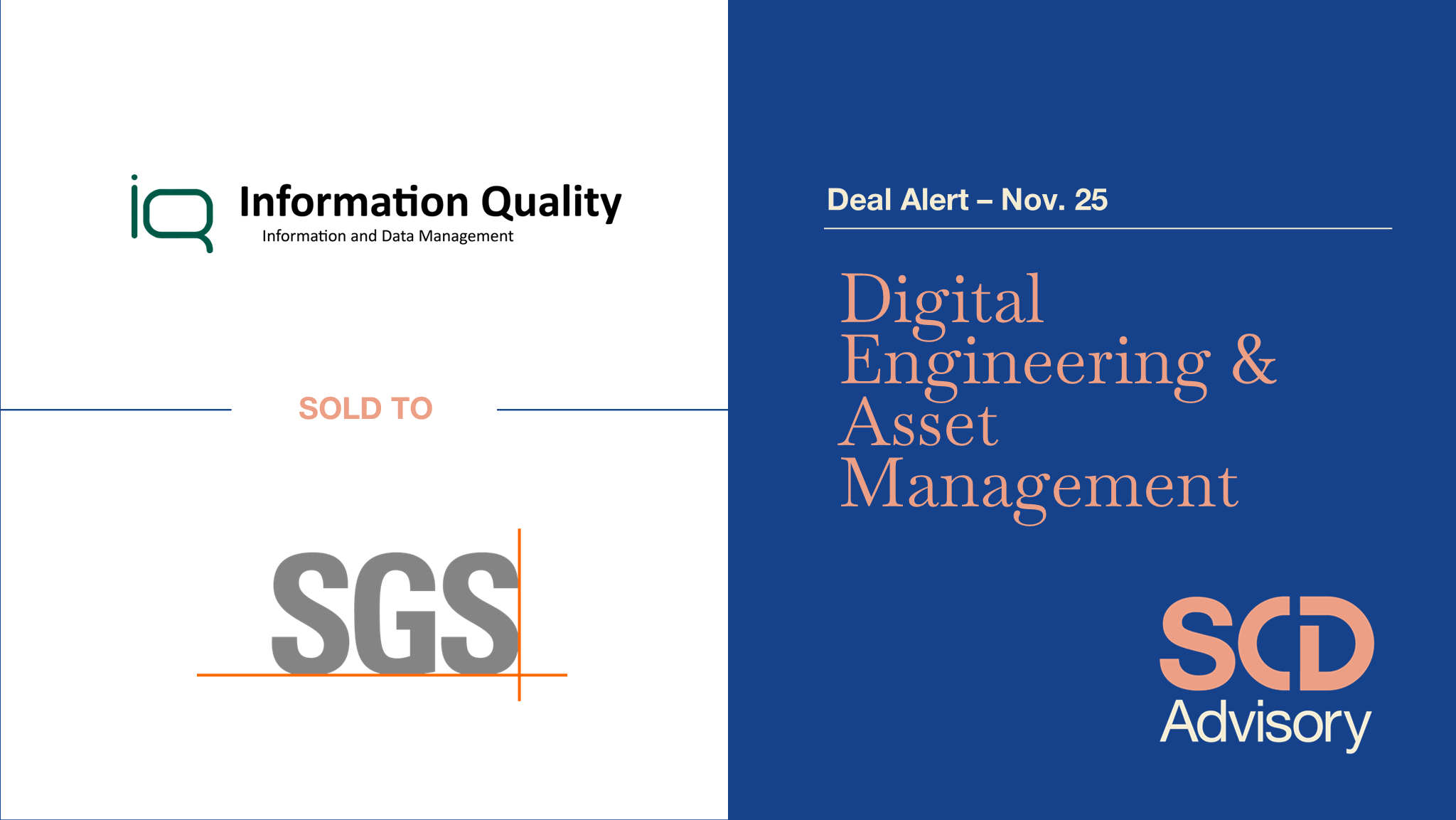
SCD Advisory acts as exclusive financial advisor to Information Quality on its sale to SGS SA
24th November 2025 4 min. read

 Our Focus image"/>


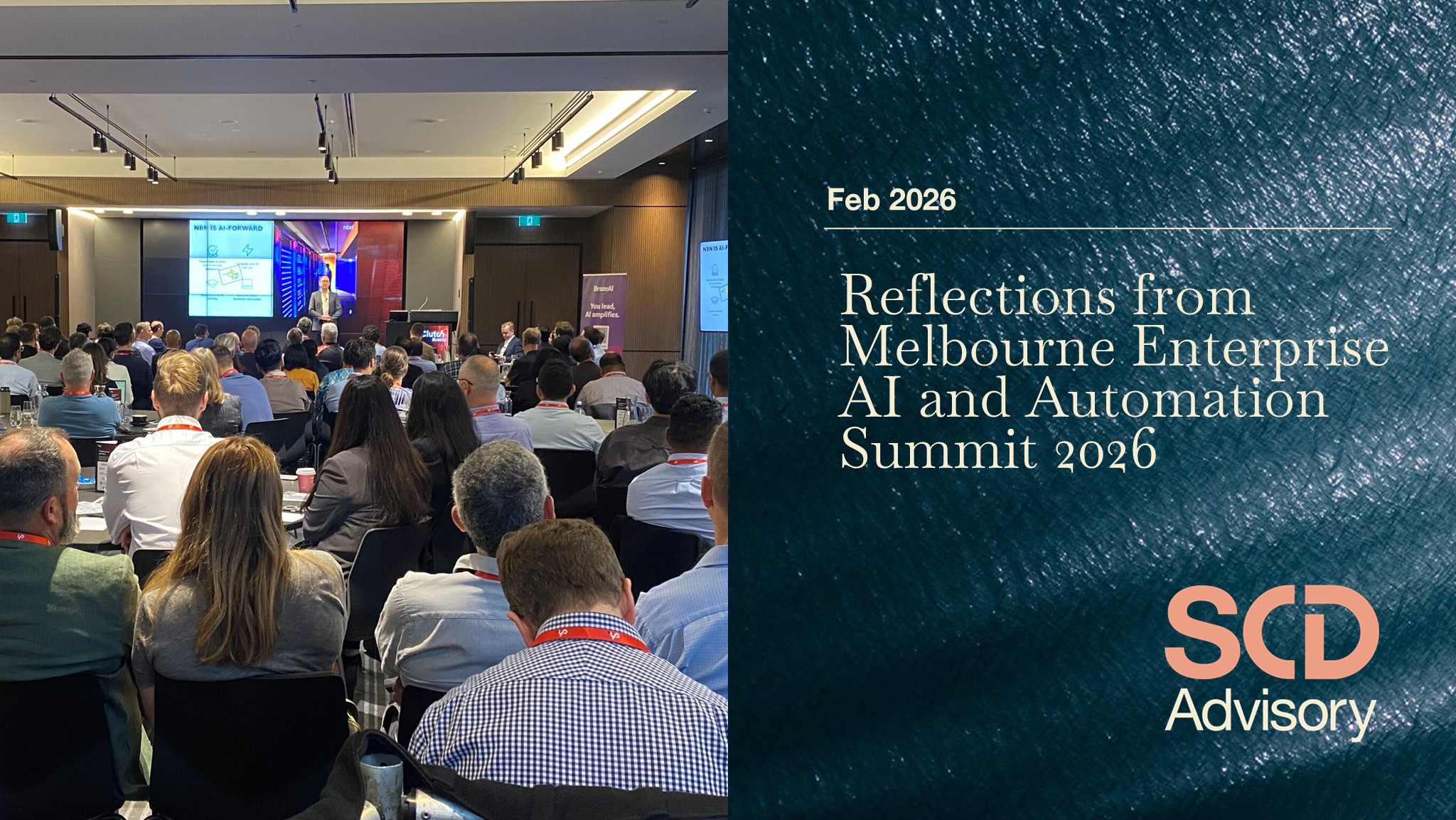
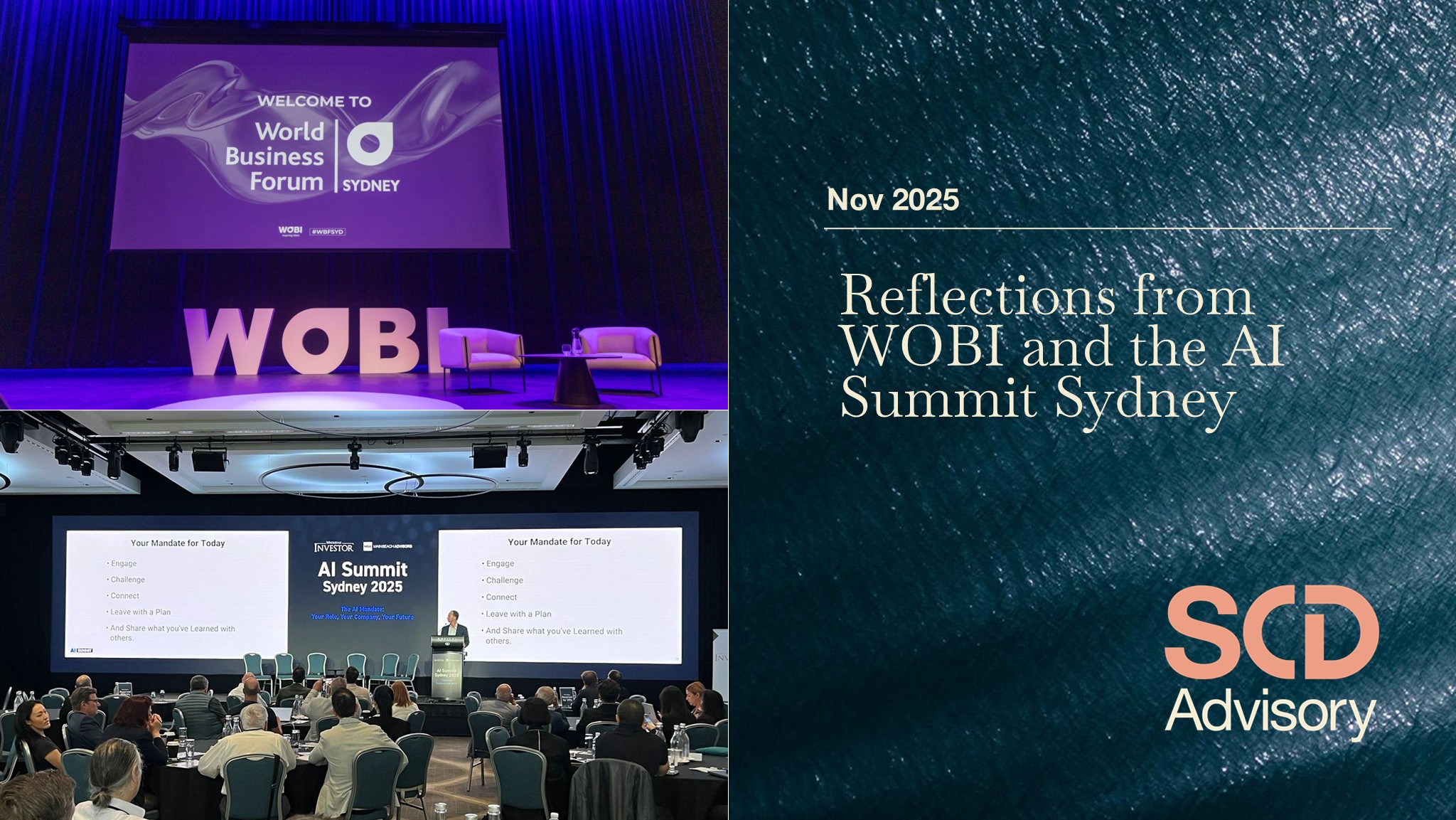
SCD Advisory attended the Melbourne Enterprise AI and Automation Summit 2026 last week and it was a strong, practical session focused on how AI is being deployed inside real organisations.
The tone of the day was clear. Enterprise AI is no longer experimental. It is operational. The conversation has shifted from “should we use AI?” to “how do we implement it responsibly, commercially and at scale?”
Here are five themes from the day that we found interesting to reflect on:
1. Governance and security are the defining constraint
One of the biggest barriers to deploying AI programs within organisations is not model capability – it is governance and security. Data sovereignty, IP ownership, explainability, vendor risk and regulatory exposure are front of mind. In many cases, the technology works. The challenge lies in aligning risk, legal, IT and business functions before anything goes live.
Many organisations are building their governance frameworks while simultaneously deploying AI tools, and that is arguably just what adoption looks like in practice. Organisations are catching up to AI in real time, iterating as they go rather than waiting for a perfect policy that may never arrive.
Risk tolerance ultimately shapes the framework. Highly regulated or risk-averse organisations tend to design layered, conservative controls. Others prioritise agility. What became clear is that governance must be fit for purpose, there is no single AI policy that can be copied and pasted across sectors. There is also a concern that overly heavy governance may slow innovation. The challenge is designing guardrails that enable experimentation rather than suppress it.
Underneath all of this sits a quest for confidence and certainty. Organisations want to move forward, but they want to do so knowing the foundations are solid.
2. Trust takes time, so start early
AI cannot be bolted into an organisation and expected to gain acceptance. It helps to embed trust from the outset through transparency, education and clear communication about how AI is being used, what data is involved and what controls are in place.
Without that groundwork, adoption tends to stall internally. Without it, customers ask harder questions. And once trust is compromised, rebuilding it costs significantly more than investing in it upfront.
3. The cost of adopting, and the cost of not adopting
A recurring tension was the dual-sided cost equation. Implementation requires real investment: infrastructure, security, governance, training and change management. But the cost of not adopting AI is becoming increasingly visible. Competitors are embedding AI into workflows, reducing delivery times and reshaping margins.
This creates genuine strategic pressure. Delay too long and market position may erode. Move too aggressively and the organisation may take on operational or regulatory risk it is not prepared to manage.
Some organisations are now facing customer scrutiny around AI usage in contracts. Clients are asking whether AI is being used in service delivery and, if so, whether efficiency gains should translate into lower pricing. The AFR recently reported that KPMG demanded a discount from its own auditor on the basis of AI-driven cost savings, a signal that AI is not just a productivity lever but an emerging commercial and contractual variable.
4. Getting from pilot to enterprise
Many AI initiatives do not struggle at the proof-of-concept stage, they struggle at scale. Embedding AI into core systems, workflows and decision-making processes requires clean data architecture, clear ownership, defined ROI metrics and genuine cross-departmental alignment. Without those foundations, AI projects risk remaining isolated experiments.
The statistic cited at the summit, that around half of AI projects fail, reinforces the point. The failure is rarely about the algorithm. It is almost always about execution discipline.
5. AI is reshaping operating models, not just tools
Perhaps the most important theme was this: AI is not a software upgrade. It is an operating model shift.
Deploying AI changes how work is performed, how decisions are made, how risk is assessed and how value is priced. It affects structure, capability and culture. Treating it as a discrete technology project underestimates its impact considerably. The organisations that appear most prepared are those thinking holistically: process redesign, talent capability and governance architecture in parallel, not in sequence.
Enterprise AI is as much about structure, risk and trust as it is about the technology itself. The pace of change is accelerating, but the frameworks governing that change are still very much being written.
It will be interesting to see how this evolves.
About SCD Advisory
SCD Advisory is an independent Australian corporate advisory boutique, dedicated to the B2B Services sectors – from IT and digital engineering to marketing and consulting – to help sharpen the growth narrative, present the right metrics, and position for successful M&A outcomes.
If you’re starting to think about a transaction, it’s never too early to start shaping the story. We offer a range of services from deal preparation to transaction execution. Contact us at info@scdadvisory.com to find out more.

Naomi brings over 7 years of investment banking expertise with a proven track record in executing cross-border transactions across Europe and the US. Prior to joining SCD Advisory, she honed her M&A advisory skills at London boutique firms Acuity Advisors and Waypoint Partners, specialising in the technology and media sectors.
Naomi’s experience highlights her proficiency in managing complex, high-value, multi-jurisdictional transactions across dynamic, high-growth industries. She is skilled in working closely with entrepreneurs and C-suite executives, as well as engaging with buyers and investors from global listed companies, providing her with a nuanced understanding of diverse stakeholder needs and perspectives.
Naomi holds a Master of Science (MSc) in Finance and Accounting from Imperial College Business School and a Bachelor of Science (BSc) in Accounting and Finance from the University of Bath.
"I love diving into the world of M&A, helping clients navigate the twists and turns of deals while making a real impact on their journey. Working with different stakeholders keeps things exciting – every deal brings new dynamics, challenges, and opportunities to create something meaningful together."





Give us a call on +61 434 730 099. Or, email us at info@scdadvisory.com
or fill in our contact form and we will give you a call.