

Deal Alert 
SCD Advisory acts as exclusive financial advisor to Information Quality on its sale to SGS SA
24th November 2025 4 min. read

 Our Focus image"/>


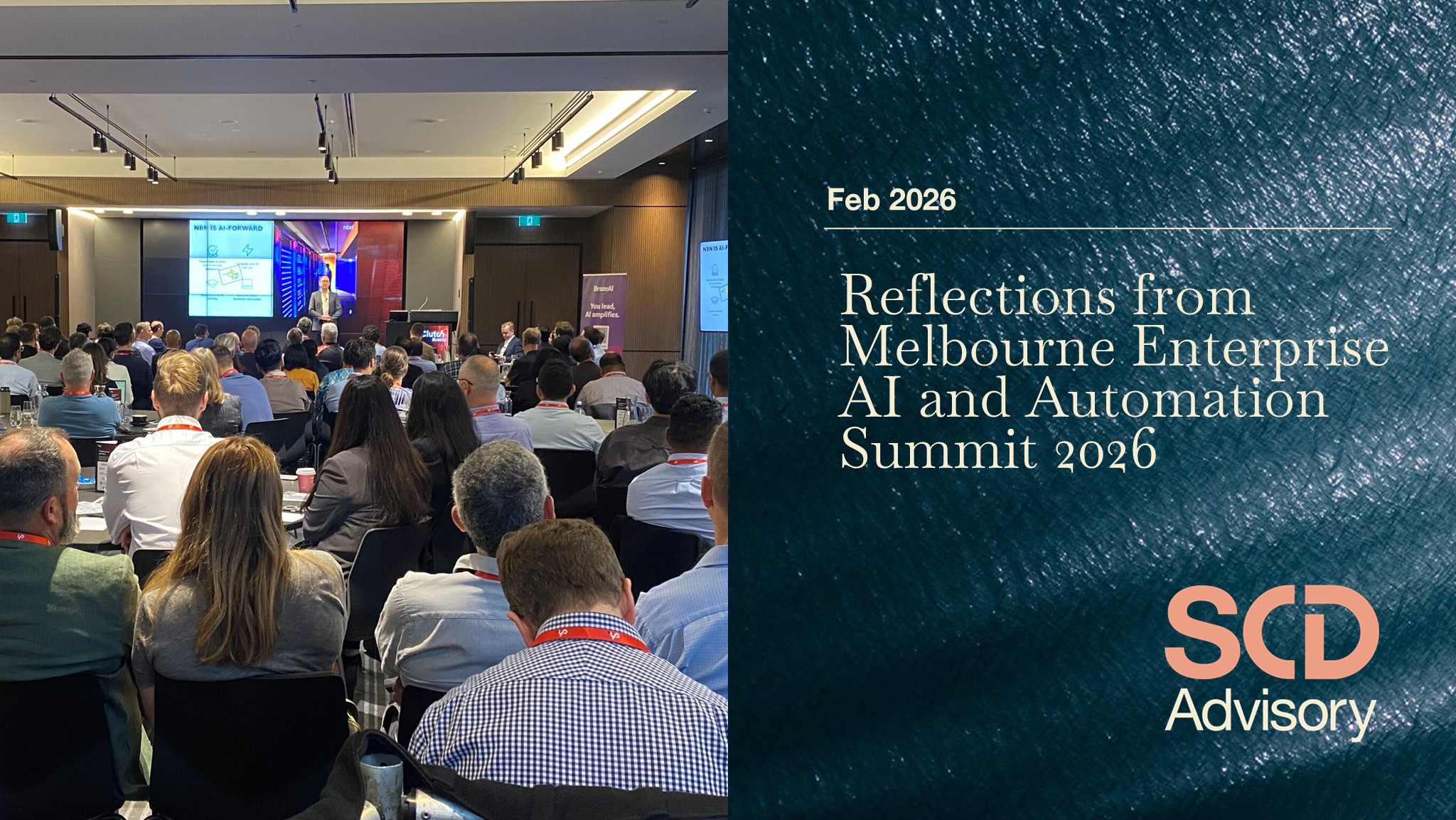
Over two days in Sydney, SCD Advisory attended the Digital Built World Summit 2026 which brought together engineers, technologists, and industry leaders to tackle the big questions shaping the built environment. From AI governance to physical robotics, the conversations were frank, forward-looking, and, at times, a direct challenge to how the industry has always done things. Here are the key themes that emerged.
1. Governance That Enables, Not Restricts
One of the recurring themes across both days was the tension between control and creativity. Many organisations are discovering that their existing governance structures are getting in the way of progress rather than enabling it. A framework built with flexibility at its core can accelerate innovation rather than stifle it. The old model of top-down IT governance, i.e. lengthy approval cycles, centralised sign-off is showing its age.
Speakers were emphatic that effective guardrails come down to education, not policy documents. When people understand why boundaries exist around data privacy, security, or quality they make better decisions than any rulebook can enforce. The risks of AI misuse are rarely malicious; they are almost always the result of misunderstanding. Digital literacy, built across every level of the organisation, is the real safeguard.
2. Data: The Fuel That Has Been Sitting Unlocked
If there was one rallying cry at the Summit, it was this: treat data as an asset. For most built environment organisations, that’s easier said than done. Decades of project delivery have left valuable information locked inside PDFs, emails, and proprietary systems which are siloed, unstructured, and invisible to AI. The biggest barrier to adoption is not a lack of capability in the technology, it is a lack of accessible, structured data to feed it.
Getting it onto the cloud is the first hurdle, and it involves significant effort in cleansing and structuring years of legacy information. From there, the work shifts to training models on enterprise-specific data rather than public ones. A model trained on the internet will never understand an organisation’s project history, contract terms, or engineering standards. That institutional knowledge, properly digitised, is where the real competitive advantage lies. The formula speakers returned to was simple: Data is the fuel for AI, and AI is the processor of that data.
Getting that pipeline right is the foundational work everything else depends on. Organisations that skip it and jump straight to deploying AI tools will find themselves building on sand.
3. AI as an Enabler, Not a Silver Bullet
The Summit struck a refreshingly balanced tone on AI. There was genuine excitement, but also sharp caution. AI was consistently framed as an enabler, not a replacement for domain expertise. Organisations rushing to deploy it as a cost-cutting measure, before understanding what it can reliably do, are storing up problems.
Nowhere was this more pointed than in the discussion on asset management. Speakers argued that time-based maintenance models are no longer fit for purpose, reliability and risk-based approaches are needed instead. However, there was a strong warning against blindly deploying AI for predictive asset management as engineering is a complex science that no machine learning model can fully understand. Therefore, AI should be used to build the tools that support engineering knowledge, not to replace the engineers.
The message was consistent: use AI to augment expertise, not circumvent it. The organisations seeing real results are those that have identified specific problems where AI genuinely outperforms manual processes, and kept engineers in the loop to catch the edge cases models inevitably miss.
4. Physical AI and the Rise of Robotics in Construction
One of the most forward-looking sessions centred on “physical AI” – AI that understands and navigates the real world, not just text or data. Unlike language models, it is concerned with how machines perceive and act within physical environments: robotic systems adapting to site conditions, autonomous equipment interpreting structural tolerances in real time. The pace of development in construction and manufacturing is accelerating.
A compelling use case was the factory of the future: robots trained using synthetic data and digital twin simulation, so they arrive on the factory floor on day one already knowing what to do. When combined with digital-first design principles, this approach has the potential to drive industrialised delivery at scale, improving quality, reducing cost, and ultimately helping to address supply challenge.
The shift is profound: from constructing individual, bespoke projects to manufacturing repeatable programs, productising design, replication at scale. For an industry that has treated every project as unique, this is a genuine philosophical change, one that requires rethinking commercial models, contracts, and skills, not just technology.
5. The Age of Agents and the MCP Revolution
There was also considerable excitement around agentic AI – systems powered by the Model Context Protocol (MCP) that allow AI agents to connect with external tools, databases, and software. Where previous AI has been reactive (you ask, it answers), agentic systems can initiate actions and complete multi-step workflows autonomously. The framing was direct: any well-defined, repetitive task can now be handed to a machine.
But this isn’t just a technology story. It’s a cultural one. The shift being described is a move from processing happening in the human mind to processing happening in the machine, with humans remaining firmly in the loop as decision-makers and oversight providers.
The practical implications are significant. An estimated 40-60% of engineering time is currently spent on documentation (reports, compliance records, handover packs). Agentic AI, preloaded with domain knowledge and connected to the right data, could systematise these workflows and give that time back. The opportunity is not to replace engineers, it is to let them spend more of their week on the work that actually requires an engineering degree.
6. Cyber Security: The Compliance Pressure Is Buildin
According to data presented by Thales, security priorities are shifting rapidly as AI embeds deeper into organisational infrastructure. The numbers are stark: 61% of organisations report their AI applications are being actively targeted, with sensitive data as the primary target; 48% have experienced reputational damage from AI-generated misinformation; and only around half of sensitive cloud data is encrypted. Some 34% of organisations don’t have complete knowledge of where their data actually lives.
For the built environment, the attack surface is growing as more data moves to the cloud and agentic workflows connect operational systems. Rising geopolitical risk is reshaping data sovereignty, and quantum computing was flagged as a threat to prepare for now, not in a decade.
Looking Ahead
The Digital Built World Summit 2026 made one thing clear: the transformation of the built environment is not a future event, it is underway. The organisations that will lead it are those investing now in the foundations: clean, connected data; genuinely educated workforces; flexible governance; and a clear-eyed view of where AI can add value and where human judgement remains irreplaceable.
AI is a long game. But the moves being made today in data infrastructure, in digital design, in agentic workflows will determine who is positioned to win it.
About SCD Advisory
SCD Advisory is an independent Australian corporate advisory boutique, dedicated to the B2B Services sectors – from IT and digital engineering to marketing and consulting – to help sharpen the growth narrative, present the right metrics, and position for successful M&A outcomes.
If you’re starting to think about a transaction, it’s never too early to start shaping the story. We offer a range of services from deal preparation to transaction execution. Contact us at info@scdadvisory.com to find out more.
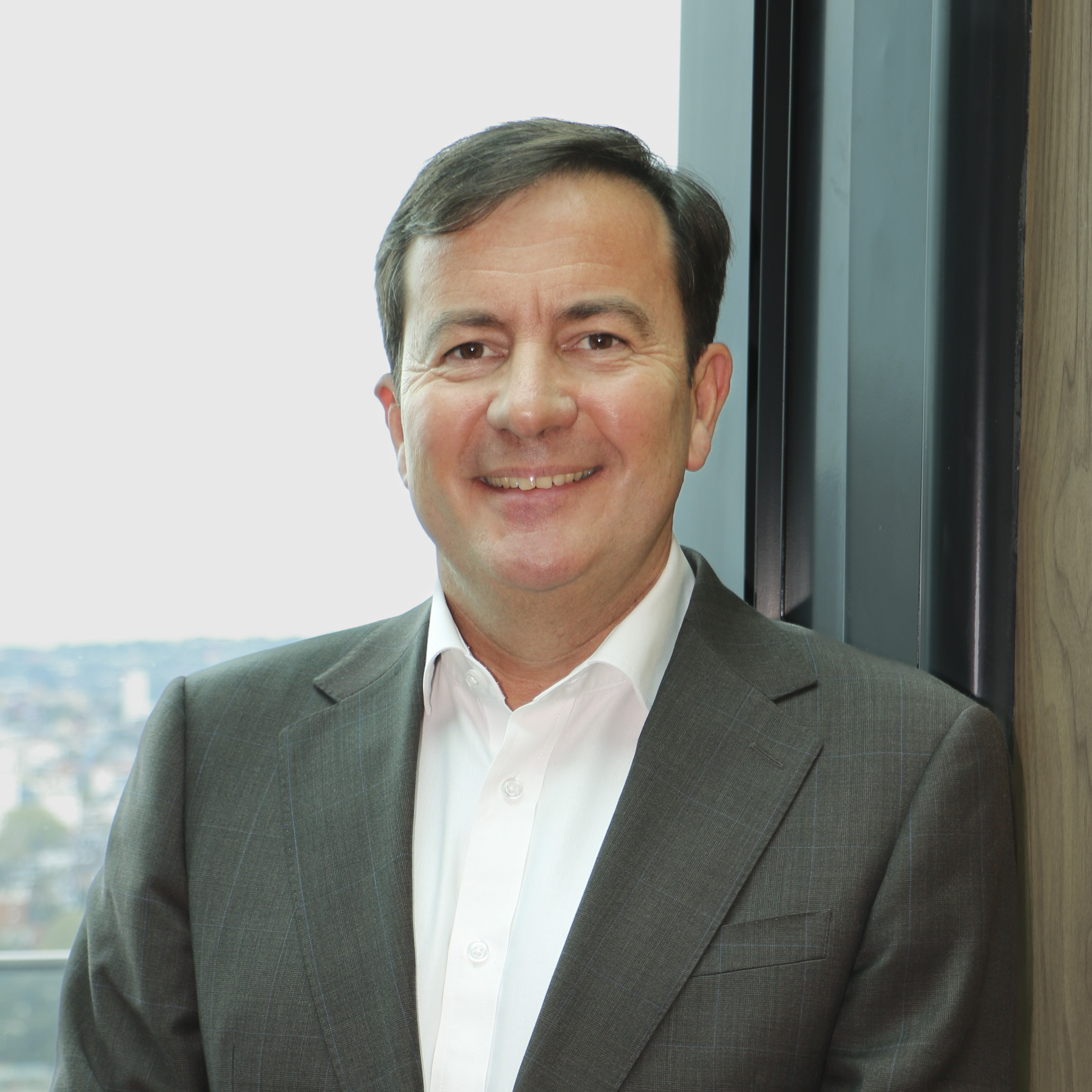
Pierre brings 25 years of expertise in advising entrepreneurs, with a deep background in management and financial advisory across corporate finance, private banking, and wealth management. His extensive experience includes numerous sell-side and buy-side deals, IPOs, mergers, integrations, and consulting projects for both small businesses and large global corporations. As an established and highly regarded advisor, Pierre is known for his savvy, trusted guidance.
Pierre’s career began in Australia before he moved to France, where he worked with prominent business figures like billionaire François Pinault on M&A deals within the Artemis group. He then founded BC&D, an M&A small-cap firm in Paris, where he managed corporate advisory services across Europe, covering both origination and execution. His work extended beyond transactions, advising entrepreneurs on wealth management strategies to optimise the transition from business ownership.
In Paris, he held advisory roles at the Belgium Family Office (DeGroof) and as a senior private banker and head of the HNW segment for France at JP Morgan. Returning to Australia in 2015, Pierre established the ANZ subsidiary of a UK-headquartered M&A firm, executing 9 M&A transactions across Australia. In 2019, he launched SCD Advisory, where he has since completed 35+ transactions, earning multiple global awards in M&A advisory from 2021 to 2024. Notably, he was named ‘Deal Maker of the Year’ by Finance Monthly in 2022 for his sale of Hypothesis to McKinsey & Co.
Pierre graduated from the Business of Troyes in France and has a postgraduate in Corporate Finance from the University of Caen. He is also a certified Financial Analyst and a Graduate of the Australian Institute of Company Directors (GAICD). Pierre further enhanced his credentials by completing the “Leading Professional Services Firms” program at Harvard Business School. His track record and accolades highlight his dedication to excellence and his exceptional skill in delivering successful outcomes for his clients.
Pierre is French, Australian citizen, Overseas Citizen of India. He is married and has two children. He is passionate about international travel, gastronomy, sailing and golf. As an experienced sailor, his motto in business and life in general is: “We cannot direct the wind, but we can trim the sails”



Give us a call on +61 434 730 099. Or, email us at info@scdadvisory.com
or fill in our contact form and we will give you a call.