

Deal Alert 
SCD Advisory acted as exclusive sell side advisor to Advancy Australia on its sale to PwC Australia
02nd October 2026 4 min. read

 Our Focus image"/>

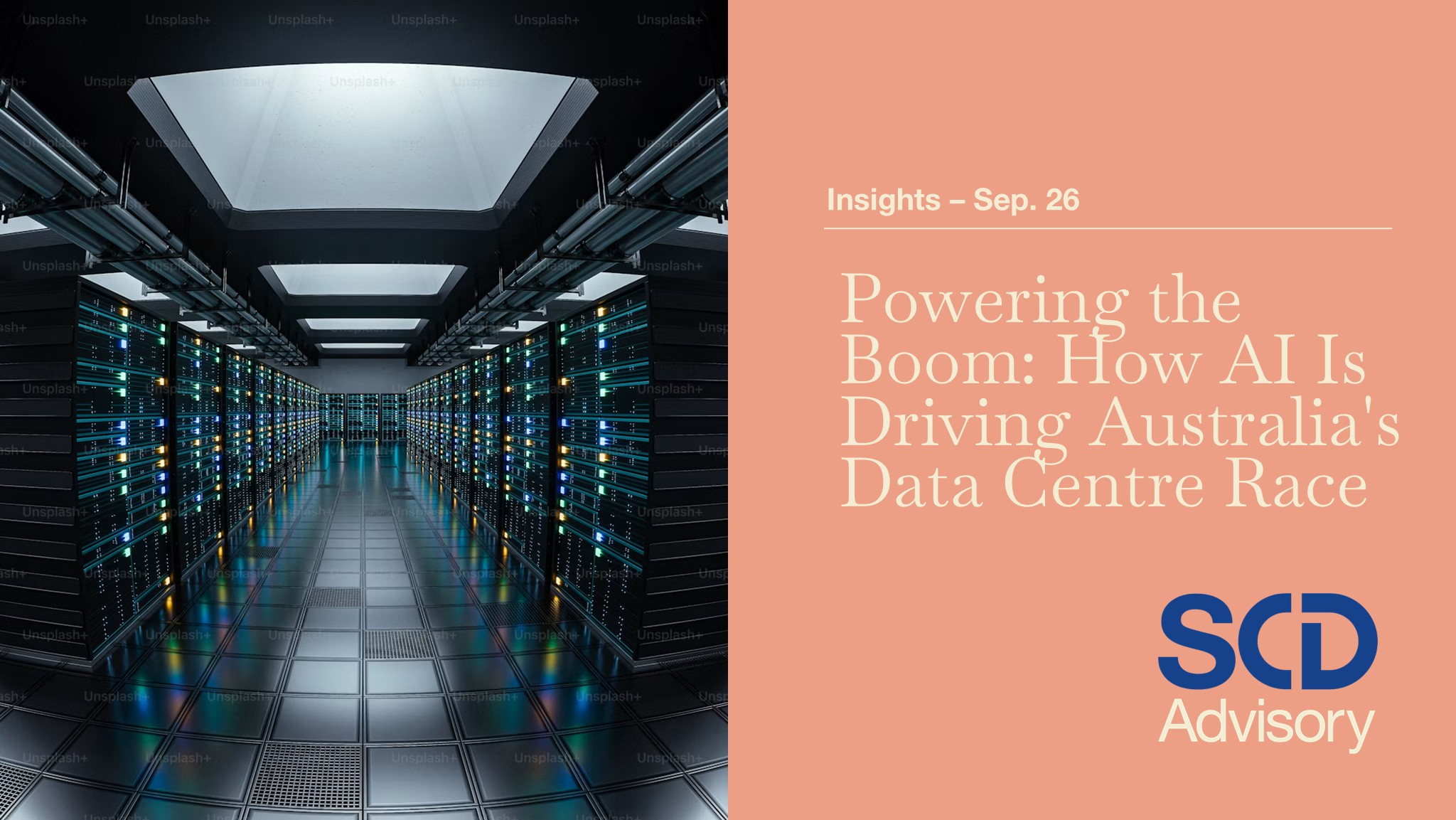
Australia isn’t just watching the global AI infrastructure race from the sidelines. As one ABC News analysis put it, more than $150 billion is now lined up to be poured into what it calls a “frenzied race to build AI infrastructure,” with almost a fifth of all non-residential construction activity in the country now directed at data centres. Westpac’s own economists have gone as far as comparing the scale of the pipeline to Australia’s historic mining investment cycles, noting the build out is “rivalling the size of the mining investment boom.” For engineering and design firms, that’s not a distant macro story. It’s rapidly becoming the defining commercial reality of the sector, and increasingly, the thing shaping who buys engineering firms and why.
How AI is actually driving the build out
It’s worth being precise about what’s behind this, because it changes how owners should think about how long it runs. This isn’t simply Australia building more general digital infrastructure as the economy grows. It’s a race that exists specifically because of AI, and it’s already large enough to matter at the level of the entire national economy. The same ABC analysis pointed out that when the latest national accounts data was released, one thing stood out: had it not been for the capital pouring into AI infrastructure, the Australian economy would have slid into contraction. That’s a striking marker of how central AI-specific investment has become to overall growth, not a side effect of it.
The capital behind that investment is also telling. It isn’t coming from telcos or generic enterprise IT budgets, it’s coming directly from the companies building and running AI models themselves. Microsoft has pledged around $25 billion to build AI and cloud capacity across the country, AWS has committed roughly $20 billion, and OpenAI is developing a dedicated Sydney campus with local operator NEXTDC. Morgan Stanley has estimated that power demand from generative AI specifically is growing at around 70% a year through to 2027, a rate that only makes sense if you accept that this is an AI driven build out rather than a broader digital one.
That AI specific intensity is also reshaping which engineering services are seeing the strongest demand. Electrical infrastructure design, covering the substations, switchboards and distribution systems needed to feed AI scale power loads, accounted for close to 40% of the entire Australian data centre construction market in 2025, according to Mordor Intelligence. Mechanical and cooling design is close behind and growing even faster, with Schneider Electric reporting that 70% of its Australian projects last year involved liquid cooling design work specifically, a service line that barely existed at this scale before AI driven density pushed conventional air cooling past its limits.
The scale backs up the “mining boom” comparison. CommBank estimates Australia’s total data centre pipeline could reach around $150 billion by 2030, representing roughly six gigawatts of potential capacity, about four times the country’s entire operational capacity at the end of 2025. Deloitte’s own project tracker had counted 33 confirmed data centre projects worth a combined $104 billion as of August 2026. The Australian Bureau of Statistics reported that data centre construction and server spending made up 17% of all private investment in the March 2026 quarter alone, the highest share on record. Whichever number you anchor on, the conclusion lines up with the ABC’s framing: this has become one of the single largest forces in Australian business investment, not a niche technology story sitting off to the side of it.
What this is doing to buyer behaviour in engineering M&A
This is the one part of the story that’s really about dealmaking rather than demand, so it’s worth treating as its own, contained question. What are buyers actually doing differently because of it?
The clearest pattern is that global engineering consultancies are treating Australian data centre and mission critical capability as something worth acquiring rather than building organically. AtkinsRéalis completed two Australian acquisitions inside six months (ADG Capital in December 2025 and WGA in April 2026), while Tetra Tech picked up SAGE Group in mid-2025 and Providence Consulting in January 2026. WSP, Stantec, AECOM, Jacobs and Arcadis have all been active acquirers across Australia and New Zealand over the past few years. As one legal analysis from MinterEllison put it plainly, “data centres are now a premium M&A asset class in Australia,” driven by AI, cloud adoption and data sovereignty concerns. That mirrors what’s happening globally too. PitchBook recently found private equity activity in construction and engineering hit a record number of deals in the June quarter, concentrated specifically in the trades that build and equip these facilities.
What makes the Australian version of this distinctive, though, is the regulatory layer sitting underneath it. Deals involving data centre and digital infrastructure assets increasingly attract FIRB scrutiny and obligations under the Security of Critical Infrastructure Act, and the federal government’s own expectations for data centre and AI infrastructure developers, published in March 2026, put national security and resilience considerations squarely into the diligence process. For engineering firm owners with real exposure to this end of the market, that’s not a side issue. It’s now a live part of how a sale process gets structured and how long it takes to close.
What this means if you’re an engineering firm owner
If your firm has real, demonstrable capability in the disciplines this build out actually depends on (power and grid engineering, mission critical MEP, commissioning, or the specialised design work data centres require), you’re sitting in one of the most actively contested corners of the Australian AEC market right now, with global consultancies competing directly for that capability through acquisition. But the story above should also tell you what buyers will actually test for in diligence: genuine technical specialisation and a track record with credible clients, not just a data centre reference on the website, and increasingly, a clear eyed view of the regulatory and critical infrastructure obligations that now sit alongside any deal in this space.
At SCD Advisory, we offer a range of services from deal preparation to transaction execution. Contact us at info@scdadvisory.com to find out more.
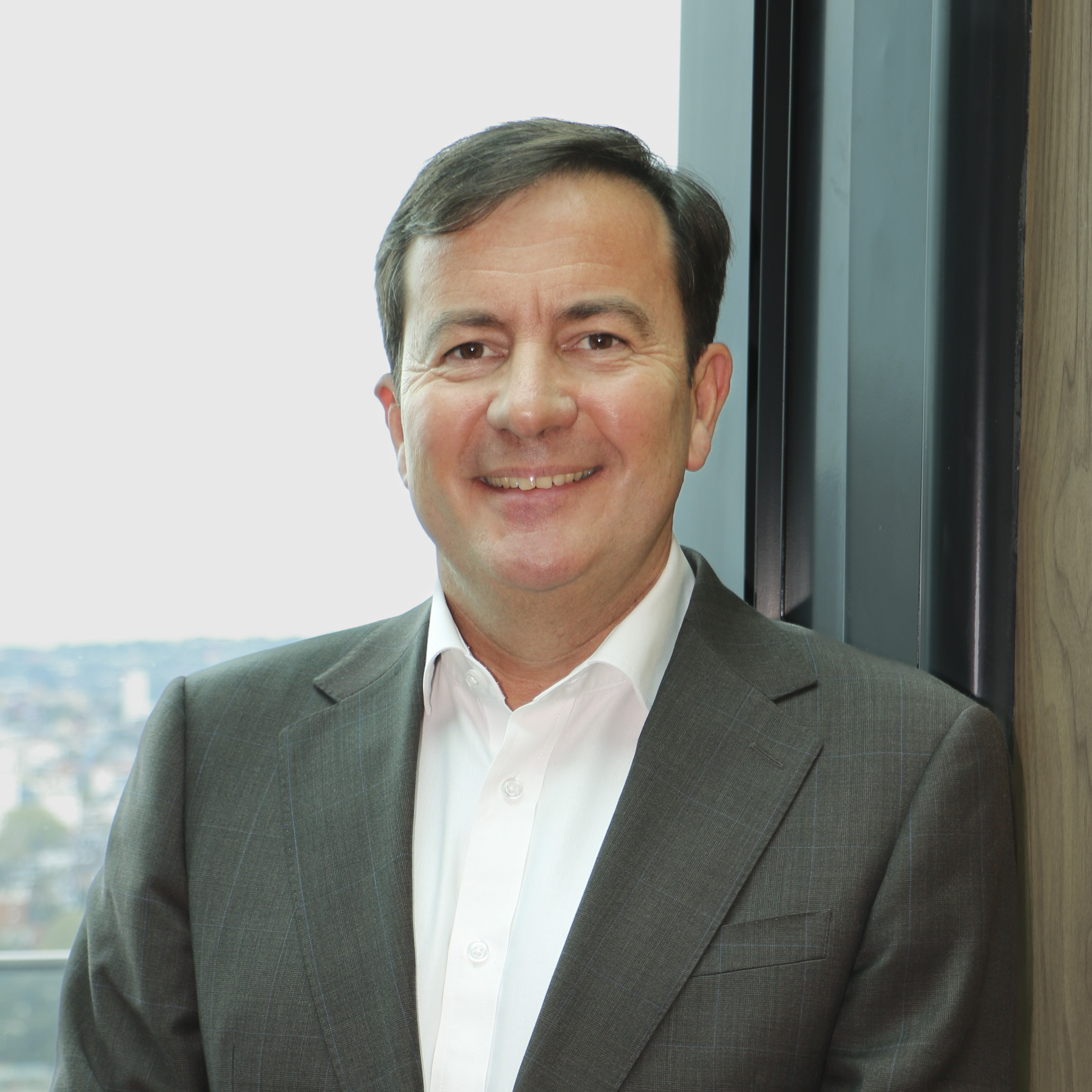
Pierre brings 25 years of expertise in advising entrepreneurs, with a deep background in management and financial advisory across corporate finance, private banking, and wealth management. His extensive experience includes numerous sell-side and buy-side deals, IPOs, mergers, integrations, and consulting projects for both small businesses and large global corporations. As an established and highly regarded advisor, Pierre is known for his savvy, trusted guidance.
Pierre’s career began in Australia before he moved to France, where he worked with prominent business figures like billionaire François Pinault on M&A deals within the Artemis group. He then founded BC&D, an M&A small-cap firm in Paris, where he managed corporate advisory services across Europe, covering both origination and execution. His work extended beyond transactions, advising entrepreneurs on wealth management strategies to optimise the transition from business ownership.
In Paris, he held advisory roles at the Belgium Family Office (DeGroof) and as a senior private banker and head of the HNW segment for France at JP Morgan. Returning to Australia in 2015, Pierre established the ANZ subsidiary of a UK-headquartered M&A firm, executing 9 M&A transactions across Australia. In 2019, he launched SCD Advisory, where he has since completed 35+ transactions, earning multiple global awards in M&A advisory from 2021 to 2024. Notably, he was named ‘Deal Maker of the Year’ by Finance Monthly in 2022 for his sale of Hypothesis to McKinsey & Co.
Pierre graduated from the Business of Troyes in France and has a postgraduate in Corporate Finance from the University of Caen. He is also a certified Financial Analyst and a Graduate of the Australian Institute of Company Directors (GAICD). Pierre further enhanced his credentials by completing the “Leading Professional Services Firms” program at Harvard Business School. His track record and accolades highlight his dedication to excellence and his exceptional skill in delivering successful outcomes for his clients.
Pierre is French, Australian citizen, Overseas Citizen of India. He is married and has two children. He is passionate about international travel, gastronomy, sailing and golf. As an experienced sailor, his motto in business and life in general is: “We cannot direct the wind, but we can trim the sails”



Give us a call on +61 434 730 099. Or, email us at info@scdadvisory.com
or fill in our contact form and we will give you a call.